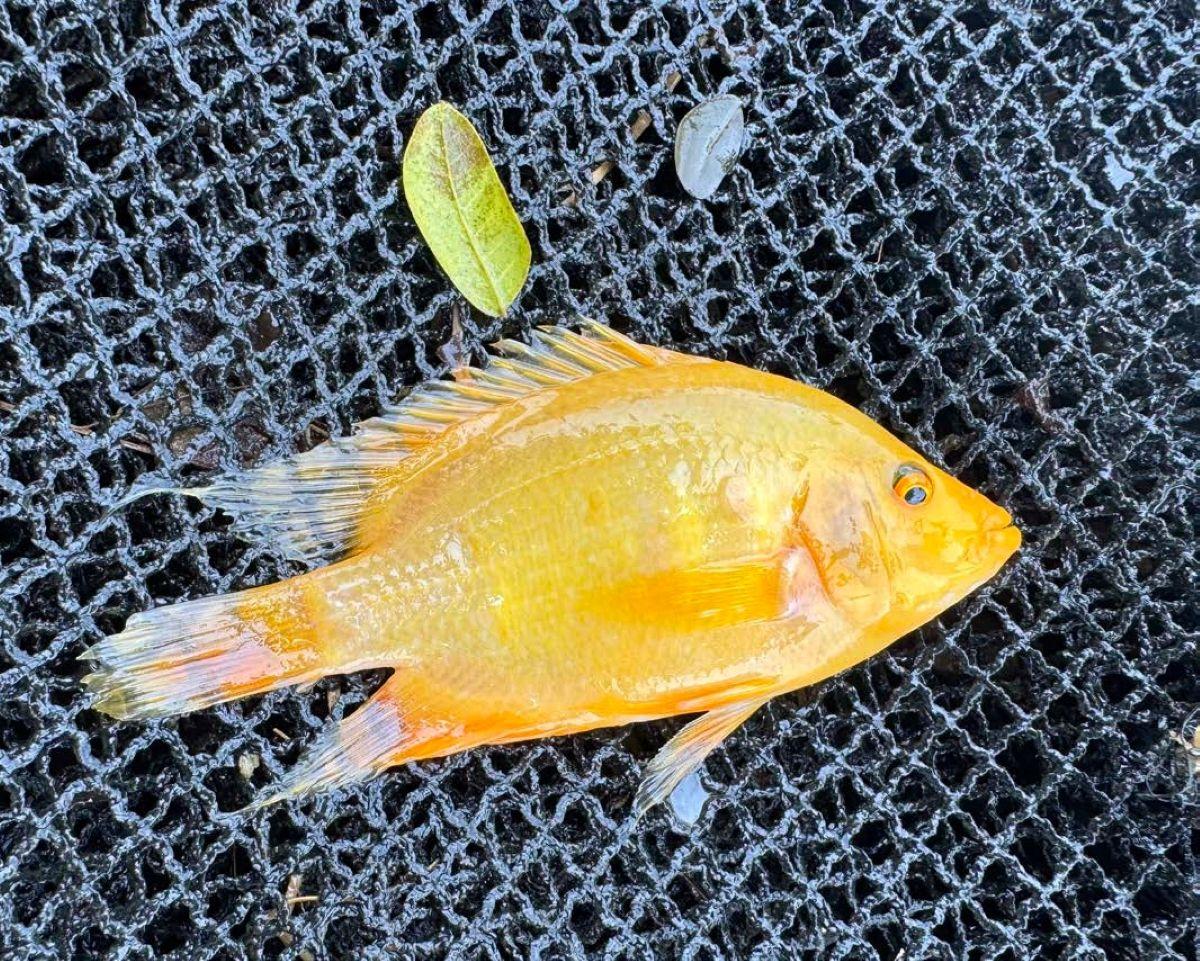
An ornamental aquarium fish prized for its bright colors and prominent head has emerged as a growing concern in one of Laguna province’s volcanic crater lakes. Flowerhorn cichlids (Amphilophus spp.), originally brought into the Philippines through the aquarium trade, have established a firm foothold in Lake Sampaloc in San Pablo City, according to researchers from the Ateneo de Manila University Department of Biology and the Ateneo Aquatic and Fisheries Resources Laboratory.
The golden-hued fish reportedly escaped into the crater lake during a major typhoon and were already being recorded in fish surveys by 2016. Since then, the species has shifted from being a handful of feral escapees to what the researchers describe as a "fenced and feral" population. In a study led by Hannah Nicole Gasmen and Dr. Janice Ragaza, the team found that Flowerhorns "are no longer merely escaped ornamental fishes, but have become integrated into local aquaculture through intentional retention and sale," suggesting that human activity is now reinforcing their presence and facilitating their spread.
The ecological impact is playing out most visibly on native fish populations. Flowerhorn cichlids are known for aggressive territorial behavior, allowing them to monopolize breeding grounds and feeding spots in the confined waters of the crater lake. The native Ayungin (Leiopotherapon plumbeus), once a commonly caught freshwater staple in the area, is now rarely encountered and is listed as Vulnerable by the International Union for Conservation of Nature. Researchers say competition from Flowerhorns is adding pressure to an already stressed ecosystem.
Lake Sampaloc is affected by nutrient runoff, microplastics and trace organic pollutants linked to untreated sewage, household waste and aquaculture practices. While these conditions degrade water quality, they do not appear to hinder the invasive fish. Ateneo’s researchers note that Flowerhorns display marked phenotypic plasticity, enabling them to adapt and even dominate in such anthropogenically stressed waters. That adaptability, combined with their integration into local fish production, is making management more complex.
Beyond biodiversity concerns, scientists are also flagging potential public health implications. Previous studies have shown that Flowerhorns can serve as hosts for Paracapillaria philippinensis, a zoonotic parasite capable of infecting humans and causing intestinal capillariasis, an illness linked to abdominal pain, chronic diarrhea and malnutrition. The Ateneo team warns that the species may act as a reservoir for parasites, pathogens and contaminants in the lake environment, and says their findings lay the groundwork for future ecological, parasitological and aquaculture research aimed at crafting evidence-based strategies to manage invasive Flowerhorn populations.
